The Ahl-i-Hadiths, Deobandis, and Barelvis engaged in a series of debates with one another over the course of the late 19th century which illustrated three sets of varying doctrinal positions. This is based on a series of thoughts I’ve taken notes on over the course of a few years reading the books and journal articles in the bottom of this section. I will try to touch upon the social background of each sect in turn, and then briefly summarize what some of their more important doctrinal differences were. I am forced to discuss doctrine for the simple reason that it is what these sects’ writers wrote most about, and it is what the scholars who study them continue write most about. However, I think that this focus on doctrinal minutia can easily mislead us from observing the more practically relevant characteristics which distinguished them from one another, namely their strategies for dealing with the colonial encounter.
Some Background:
Before delving into the differences it is necessary to make a few remarks on the common context of defeat which all three sects shared. One piece of context is the failure of the Wahabee jihads in the earlier part of the 19th century, a piece of background which almost nobody talks about for some reason. Syed Ahmad Barelvi (not to be confused with the later Barelvi movement) led a jihad against British rule, Sikh rule, and local Muslim rulers whom he considered un-Islamic. His movement gained traction in the 1820s and 1830s, particularly in northwestern India (modern-day Pakistan and Afghanistan). The goal was to establish an Islamic state based on strict adherence to the Quran and Hadith. He fought against the Sikh Empire under Ranjit Singh but was ultimately killed in 1831 at the Battle of Balakot. So that failed.

A second failure is the failure of the 1856 mutiny the Muslim ulema was starkly confronted with the weakness of their position in the post-Mughal political environment. As a whole they attributed the decline of Muslim power not to a political failure or to technological factors, but rather to a failure to live as proper Muslims. It was the desire to revive and reform true Islam amongst the Indian Muslims which constituted the overall driving motivation behind this spate of sectarian proliferation. Though all three groups were all philosophically anti-western and religiously conservative in the doctrinal sense, they were modern and “westernized” insofar as they made use of western cultural forms (education) and technologies (printing).
And then a third, which doesn’t require much elaboration, is just the overall failure of Muslim regimes to retain control over the Indian subcontinent in the first place, and their loss of sovereignty (including the end of their domination over Hindus and Sikhs) and subjugation by the British.
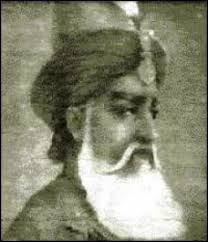
Shah Waliullah’s (1703–1762) school of thought is the ultimate progenitor of all three schools which I’ll be considering, though his ideas are advanced along different lines in each sect. On the one hand, it is true that Waliullah promoted the use of independent reasoning to analyze the Quran and Hadith, and wanted to make these texts more available without any commentary, at least to the Persian reading public. This is the part of his teaching which would be emphasized by the Deobandis and the Ahl-i-Hadis. On the other hand, he also valued the teachings of Islam’s historical intellectual and jurisprudential schools, and utilized them in his own Quranic interpretation. In addition, while he challenged some traditional Sufi practices, he was an overall supporter of Sufism and intended to reform rather than oppose Sufism. These are the aspects which would be emphasized by the Barelvi sect. He additionally enjoined his followers to adhere to Hanafi law in particular. On this point the Deobandis and Barelvis agreed (a rare occasion), while the Ahl-i-Hadis dissented. From this alone we can already see the general pattern forming: Barelvis adopt a more permissive traditionalist position, Ahl-i-Hadis adopt a conservative textualist position, and Deobandis adopt a conservative traditionalist position.
Now let us examine each school in turn.
Continue reading
 Videshi Sutra