Earliest Glimpses of Colorado Hinduism

The early 20th century in Denver marks a fragmented period for the presence of Hinduism, a time when authentic Hindu philosophy and spirituality began to emerge alongside a flurry of sensationalist and dubious claims. The Vedanta Society made a brief but notable appearance, attempting to establish a foothold for genuine Hindu teachings, though its influence appears to have been transient. More dominant in this period, however, were hucksters and lecturers who used Hindu concepts and imagery in ways that blended Western spiritualism, occultism, and commercial opportunism. Even among these figures, it is difficult to discern where genuine spiritual intent ended and snake-oil salesmanship began. These fragments highlight a historical moment where the public’s fascination with the exotic and mysterious often overshadowed earnest efforts to introduce Hindu traditions, creating an ambiguous and complicated legacy that warrants further exploration.

The absolute earliest fragments are some scattered references (2) in very early (1894) newspaper about Hindu beliefs or publications, but they are very sparse, and view the subject hazily and at a distance.

Some other very early articles contextualizing the extremely early Vedantic and Theosophical period in the context of the concern, anxiety, or even panic surrounding New Thought, occult, and other novel turn of the century religious movements are as follows:

Older Christian Science (1899)

Age of Spiritual Hunger (1903)

Mixture of Odd Beliefs (1910)

Wrongly Blamed (1906)

But for where there is more meat to the story, I will start with something a little more concrete:

The earliest reference I’ve been able to find of a Hindu actually visiting Colorado is actually a Brahmo Sajami, B. B. Nagarkar, who visited in 1894, having previously represented that tradition at the Chicago Congress of Religions the previous year. Despite the Brahmo Samaj being one of the first to bring Hindu thought to Denver and perhaps the US in general, its influence would eventually be eclipsed by the Ramakrishna movement, which gained prominence in the early 20th century, particularly through the work of Swami Vivekananda. Nevertheless, Nagarkar’s visit marks an important early moment of direct engagement between Hinduism and Colorado, predating the later widespread interest in Vedanta and other aspects of Hinduism that would follow with the Ramakrishna Mission and other movements.

Continue reading

“My Body = My Property”?

I recently saw some Libertarian women carrying a sign which said “My Body = My Property”. I suppose they were doing this as a sort of alternative permutation of “My Body, My Choice” to lend themselves an explicitly Libertarian flare to their pro-abortion rights advocacy. This is also a common sentiment and justification for abortion rights which I have heard from many Libertarians. However then I thought…. “Is it really property though?” This actually seems somewhat contentious. Let me go over some perspectives in order from least to most persuasive to me. Unlike a lot of what I post here, this will just be a few spur of the moment thoughts rather than something deeply researched and considered. This shouldn’t be construed as implying any particular stance on abortion.

The sign in question

On one hand, on a Marxist critique, for instance, one might argue that by viewing the body as “property,” we’re objectifying it, treating it as an object subject to public decision over ownership and control, a thing to be utilized and exploited, an form of alienation splitting the integrated self upon itself. You can also see how this would flow into a feminist critique where the body is now becoming an object or a commodity to be controlled, purchased or exchanged.

Continue reading

Covert Lokayata V: Arts, Culture, and Modernity. (+Bibliography)

(Click to go back to Part I: Doctrines)

(Click to go back to Part II: Proto-Materialism in Vedic and Tantric Traditions)

(Click to go back to Part III: Orthodox Darshanas)

(Click to go back to Part IV: Social and Physical Sciences)

lokayatapart5.png

Culture:

Much of the cultural output from the Mayura to the Gupta period reflects the themes of Lokayata. Though it had always been prevalent amongst the population, as an aspect of Arthashastra, a pragmatic, syncretic permutation of Lokayata contributed to the ruling ideology. (1) Shastri is fully convinced of their influence:

“The Lokayatikas were a creed of joy, all sunny. Through their influence, at that period of Indian history [broadly speaking, 200 BC – 400 CE], the temple and the court, poetry and art, delighted in sensuousness. Eroticism prevailed all over the country. The Brahmin and the Chandala, the king and the beggar took part with equal enthusiasm in Madanotsava, in which Madana or Kama was worshipped. Reverences to this festival are not rare in works of poets like Kalidasa, Bisakha, Datta and Sreeharsa.” (2)

1007-107-meghdoot-1979.jpg

Illustration depicting a scene from a Kalidasa poem. This type of erotic content is fairly standard for poetry of this period. The poem and image source are Joshiartist.com

Poetry of this period communicates the earthly, pleasure oriented, anti-clerical ethos extremely well. What follows are four representative samples of poetry from the era of Lokayata’s greatest influence:

Who was artificer at her creation?

Was it the moon, bestowing its own charm?

Was it the graceful month of spring, itself?

Compact with love, a garden full of flowers?

That ancient saint there, sitting in his trance,

Bemused by prayers and dull theology,

Cares naught for beauty: how could he create

Such loveliness, the old religious fool?

Kalidasa (3)

Continue reading

Ab Ki Bar Trump Sarkar

ap_16132301815691-1.jpg

Image Source: Quartz India

This recent spate of “right wing” victories which includes Brexit, Trump, and the European nationalists is part of the same global phenomenon which produced Modi.

It almost seems too obvious to point out how similar Trump and Modi are but I haven’t seen many people in my circles saying it. Probably because I hang out mostly with Americanized NRI liberals in the Brahmin class (as per Moldbug’s schema, not Chaturvarna). These people love Modi and hate Trump and want to avoid finding the obvious similarities and connections. There are some articles tracing out the connections. Mostly in condemnatory tones. But some sources are saying the exact opposite as well, which is totally ridiculous. So lets go over some of the basics.

Victory of the Edgelords: The first major similarity is their negative public branding, and the material causes for why that sort of branding was possible in the first place. Trump and Modi both are both considered bigots by their liberal opponents (particularly in English language media which has been totally captured by leftist establishment forces), and have garnered support from right wing radicals. In Trump’s case this mostly centers around his rhetoric, though he is also favored by far right groups like (numerically and politically insignificant) KKK or the (much more numerous and significant) Alt-Right. In Modi’s case it derives from his institutional connection with the RSS and Hindutvadis in general, and his role in the Gujarat riots. In both cases this seemed to have damaged their reputations and election chances at the time. They were considered outsiders with hickish attitudes by their own liberal countrymen, and scary nationalists by neoliberals in other countries. Remember how under Obama the US denied Modi’s visa? Well Trump narrowly escaped the same fate at the hands of the UK parliament. Ultimately in both cases this politically correct negative branding failed to stop the candidate, as what the media establishment portrayed as a negative and bigoted campaign was interpreted very differently by the voting public.

Continue reading

Covert Lokayata IV: Social and Physical Sciences

(Click to go back to Part I: Doctrines)

(Click to go back to Part II: Proto-Materialism in Vedic and Tantric Traditions)

(Click to go back to Part III: Orthodox Darshanas)

lokayatachartfiddled_science.png

Political theory

The word Lokayata occurs only once in the Arthashastra (PDF here), but it is a very significant mention. The treatise opens with the line “Om, salutations to Sukra and Brihaspati” the two progenitors of materialism and deha-vada (doctrine of the body as soul) in Vedic mythology. There are also numerous mentions of the “school of Brihaspati” later on in the text; though it is ambiguous which school Kautilya is referring to. Kautilya’s mention of Lokayata is as follows:

Anvikshaki comprises the Philosophy of Sankhya, Yoga, and Lokayata… Righteous and unrighteous acts (Dharmadharmau) are learnt from the triple Vedas; wealth and non-wealth from Varta; the expedient and the inexpedient (Nayanayau), as well as potency and impotency (Balabale) from the science of government.

When seen in the light of these sciences, the science of Anvikshaki is most beneficial to the world, keeps the mind steady and firm in weal and woe alike, and bestows excellence of foresight, speech and action.” (1)

Shukra_graha.JPG

Shukra. One of the teachers of the Asura in Vedic mythology, along with Brihaspati. Source: Wikimedia Commons

Continue reading

Covert Lokayata III: Orthodox Darshanas

(Click to go back to Part I: Doctrines)

(Click to go back to Part II: Proto-Materialism in Vedic and Tantric Traditions)

lokayatachartfiddled_PT3.jpg

Orthodox Hindu Schools

As anyone familiar with the orthodox Hindu darshanas knows, a belief in God is not a central feature of all orthodox schools of thought. Two of the orthodox Darshanas in particular seem distinctly rooted in materialism: Samkhya and Vaisheshika. Those are discussed below.

Early Samkhya:

Chattopadhyaya goes so far as to claim that:

“If the Sankhya philosophy were in the earlier times an explicit philosophical re-statement of the fundamental theoretical position implicit in Tantrism, and, if further, as we have aready tried to argue, the term Lokayata originally stood for the beliefs and practices broadly referred to as Tantrism, then original Sankhya may be viewed as the most important developmet of the Lokayata tradition in Indian philosophy. Silamka, the Jaina commentator, was justified in denying any basic difference between Sankhya and Lokayata. Sankara, too, made the Sankhya philosophers quote the authority of the Lokayatikas”[1]

Continue reading

Hindu Iconography from Far Central Asia

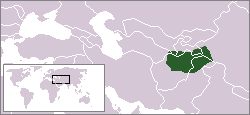
I already made a post about Hindu iconography in Japan, as expressed primarily in Shingon Buddhism. Now I’ll look to the west. As in the east, Hindu iconography appears in an ancient and intermixed state alongside other forms of iconography. In this case the context is Manichean, Zoroastrian, Greek, indigenous, and Buddhist. In many spots it gets hard to distinguish the border between iconographical forms as they tend to blend together into syncretic representations. It really is a historically unique scenario which produced such a melting pot of aesthetic trends. In any case the locations of these images, in a loose sense, define the high water mark of Hindu cultural expansion into Western Asia (Irredentists eat your heart out).

For the purposes of this exercise, I’ll ignore the art of Gandhara (inner Afghanistan/Peshawar region) which is already well known and should really be considered Indian art rather than an export. I’ll only be looking at art from north and west of Gandhara I’ll also be ignoring images of the deity Mitra/Mithra, because there are simply too many of them as this deity became very popular in the west and evolved its own well developed cult in Europe which is really a very different phenomenon than the diffusion of Shiva, Ganesha, or Parvati imagery in Western Asia. Due to the nature of the subject, some of the sourcing on these images or information is sketchy, but I’ll flag that when it is relevant.

Kushan Culture

Bactria

Bactria-320BCE

Bactria, 320 BC. Source: Wikimedia Commons

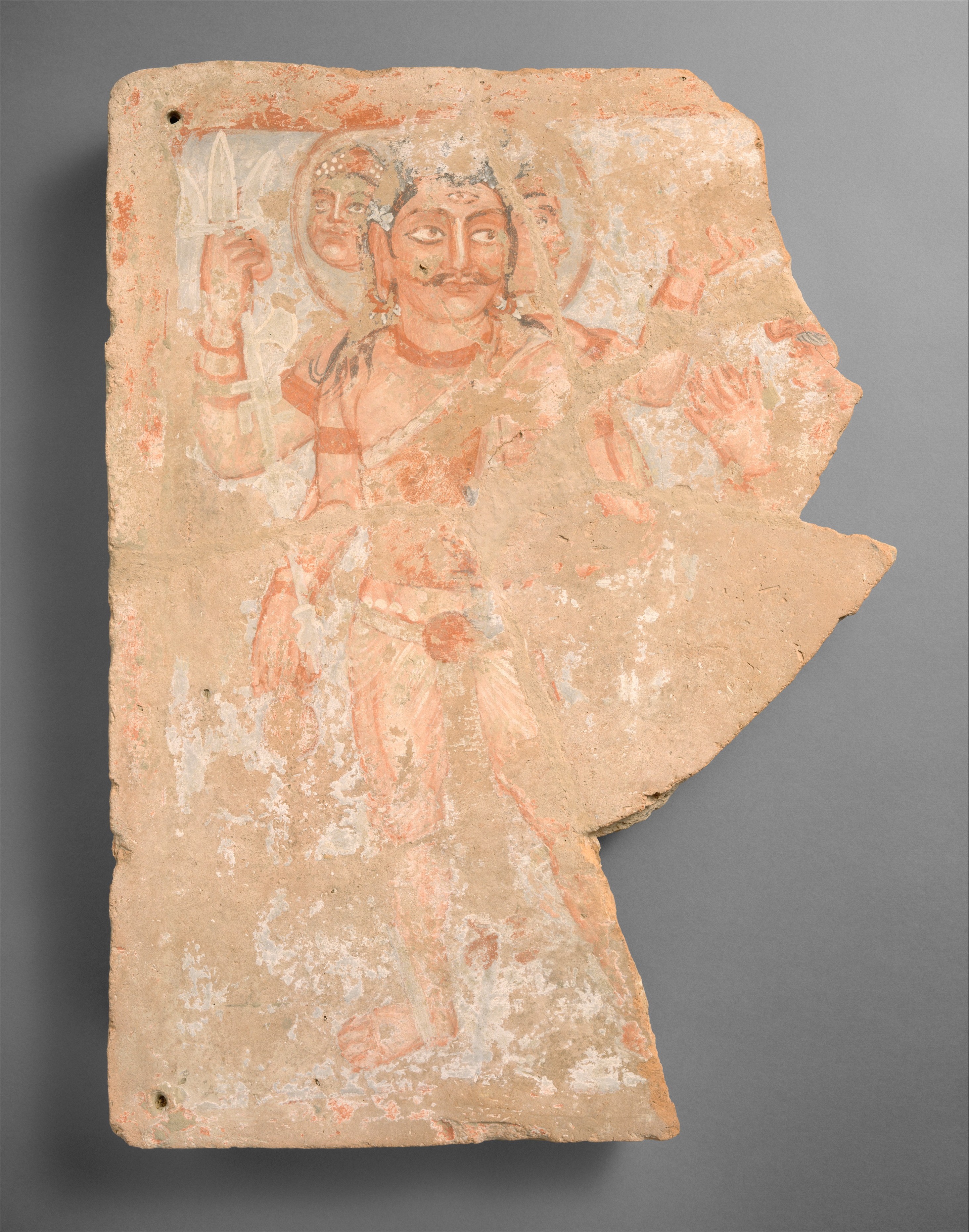
The following pieces are from the Metropolitan Museum of Art in New York City. They are all from the same archeological find, so I’ll only list that information in the first caption.

DT917

Panel fragment with the god Shiva/Oesho. Period:Kushan Date:ca. 3rd century A.D. Geography:Bactria, Culture:Kushan Medium:Terracotta, gouache Dimensions:H. 57.2 cm, W. 41.6 cm, D. 5.7 cm Classification:Ceramics-Paintings. Source: The Met

Hegel on India and Hinduism

I was reading Hegel a while back and I thought my dear readers might want to see some of his content. At the end of this introductory bit I have just excerpted in total “Section II: India” and “Section II: (Continued) India Buddhism”  from “Part 1: The Oriental World” of G.W.F Hegel’s The Philosophy of History. So if you’d like to skip my blather, go down to the section “On India” right below the winged Zoroastrian symbol.

Introduction and preliminary analysis: 

Everyone seems to dislike that Hegel is overly obtuse and abstract, but when he discusses history he is actually taking in very concrete terms most of the time. This is not exactly a reliable source for specific information about Indian history or philosophy. In some ways it is a better study of how Europeans see India than it is a study of India. It suffers from a caricatured view of India as a land of contradiction, chaos, and conflict. For the most part his characterizations of India aren’t totally baseless though, as stereotypes often have a basis in reality. They are just stereotypical exaggerations or generalizations which lack any sort of nuance or qualification. He also seems to uncritically accept very early orientalist insights in Sanskritic culture as fact, and as reflective of the Indian society of the 1800s. To some degree this is excusable because Sanskrit translations and real detailed historical knowledge of India were still undergoing development in Europe. He had to have been over reliant on early translations of the Vedas, the Dharmashastras (particularly Manu), the Pali canon perhaps, and the writings of some few high-philosophers. Given his time period, his knowledge of Indian philosophy is actually impressive. He writes some rather detailed information here about the Samkhya, Nyaya, and Vaisheshika schools, so he at least knew that much. Yet perhaps I am being too generous to Hegel here. It is somewhat baffling to me how he derives an extreme idealist worldview from these three schools, Vaisheshika in particular. It was reading those philosophical schools which persuaded me that India has a sublimated tradition of naturalism. I feel that if he was also familiar with them it should have occurred to him that Hindu idealism is at least alloyed with a rationalistic form of naturalism.

Continue reading

The Islamization of Bengal

bengali final8 1

The cover of Richard Eaton’s book, upon which this post is premised.

I just reread Richard Eaton’s book The Rise of Islam and the Bengal Frontier, 1204-1760, and thought I’d make some observations on the theory it purports, and some of the implications. The entire book is available for free: Here.

The Theory

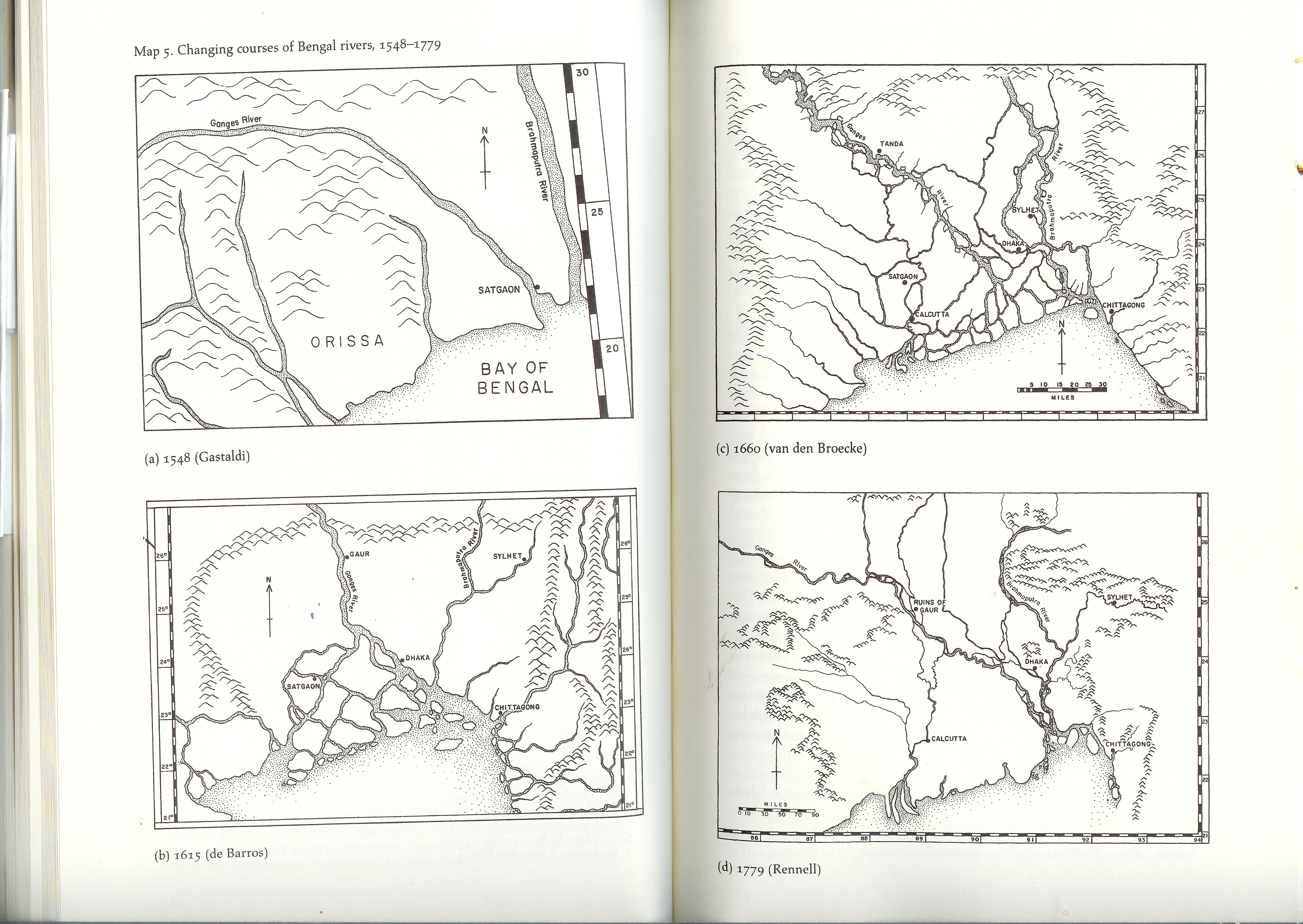
Eaton’s theory of Islamization rests on a much broader theory of how Bengali religion; both Hindu and Muslim was transmitted. It goes more or less as follows: New agricultural technologies, systems of land tenure, and legal/governing institutions were the main drivers behind the spread of both religions. Initially Brahmins, but later Sufis would head into a new region of the delta and establish themselves as local elites responsible for agricultural management (a similar pattern can be seen in the Deccan). Often the Sufi leader and his institution, or a temple institution would get a land grant from the state for this purpose, but this was not always the case. These religiously affiliated colonists brought with them new agricultural technologies from the west, which they would then implement locally. By some arrangement, religious elites became aligned with political elites. This was either because a preexisting regime sent out the Brahmins/Sufis in the first place, or because the regime sought to co-opt them once they had gained a following, and increased local agricultural productivity. Along with religion, the Brahmins and Sufis would bring in with them notions of law, languages, trading customs, etc. which brought eastern regions into the orbit of Indic civilization. In western Bengal this happened in the Epic period. In north Bengal, this happened in the historical period just preceding the Mughals. Due to its lateness, the land tenure system in the north was more primitive, relying on corvée labor rather than taxation in the form of crops or currency which existed in the west of Bengal. In the east and south of the delta however, no organized system of agriculture, government, or religion existed prior to the Mughal period. It was what we would call “aboriginal.” The main driver of this entire pattern was the eastward shift of the Gangetic delta between ~1400 and 1800, which rendered old land less productive, and forced people to confront the task of clearing and farming the forest. This moving river system thus constitutes a frontier in multiple dimensions; ecological, political, technological, and religious. All of these frontiers long predate the presence of Islam in the subcontinent, and can be easily discerned in earlier Sanskrit depictions of the region. Most of Bengal is described as mleccha territory outside the domain of “Aryavarta” in Sanskrit texts like the Baudhayana Dharmasutra (5th c BCE). Thus, Islamization is just the most recent episode in a phenomenon, which has roots in the Bronze or Iron Age.

bengali final8

From the book. Maps illustrating the eastward migration of the Bengal delta.

Other Theories

This general pattern explains the population drift, and the transmission of new religion and technology eastward over time. But here it might be necessary to back up a step. The broadest problem, which Eaton is trying to solve, is the uncanny distribution of Muslim populations in the subcontinent. It is striking on a demographic map that Muslims are concentrated on the eastern and western flanks of north India, but are thinly spread out in the middle. Eaton lays out the prior 4 theories to explain Islamization before presenting his own. They are as follows: Continue reading

How Rammohan Roy Broke Into Liberal Discourse

A bust which Roy actually had the patients to sit for (unlike many portraits of him). Image Source

A bust which Roy actually had the patients to sit for (unlike many portraits of him). Image Source

The Problem

When entering the realm of European liberal discourse, Rammohan Roy was faced with a double sided problem. Firstly, liberal thought at the time considered India to be in a state of backwardness, and therefore inherently unfit for political autonomy. Secondly, it was thought that a culture lacking a tradition of liberty couldn’t produce individuals worthy of entering the public discourse. Thus, Roy had to simultaneously challenge liberalism’s notions of civilizational advancement and backwardness, and also convince his opponents to stop seeing him as a primitive who lacked the right to participate in the intellectual arena.

Roy’s solution to this (consciously formulated or not) was to create a new paradigm within liberalism based on some concept of “class” instead of race or culture. In this paradigm elites across cultures have more in common with one another, than they do with their respective sets of commoners. This is why elites everywhere practice forms of religion closer to monotheism, and also why idolatry and trinitarianism are practiced by the masses of ignorant commoners. Based on this logic, the British elites in India should support and cooperate with their Indian counterparts, as they constitute the same in-group. Educated and mercantile elements of both societies should engage in commerce and cultural interchange, and work for the upliftment of the ignorant underclass of both British and Indian populations. In this new model, the relationship of liberal upliftment is shifted from something akin to the “white man’s burden,” to something more akin to the “bourgeois monotheist’s burden.”

Liberalism was indeed universal in regards to the equal capacities of all human beings. However, liberals saw those who came from “despotic” societies as inherently primitive in social development, and therefore unworthy of political representation. Furthermore, liberals looked for certain social indicators, which would identify people as worthy of political inclusion, and deserving a voice in the public sphere. These indicators included language, dress, education, and religion which were easily recognizable as civilized by Europeans.1

Continue reading