I’ve been reading this book called “The Periphery Strikes Back” by Udayon Misra. It examines the historical context behind secessionist movements in Assam and Nagaland. Here I am just going to voice my observations based on the first two chapters, which deal with Nagaland specifically.
A map representing a common conception of “Greater Nagaland”
Nagaland was largely left to govern itself under British rule, with minimal direct administration. However, this “ungovernment” was quite strict, as the Naga tribes were forcibly isolated from commerce and interaction with Assam and the lowland peoples. Despite this isolation, American Baptist missionaries arrived even before the independence movement, introducing Christianity. According to this text, the spread of Christianity—along with, to a lesser extent, modernist ideas and economic structures—disrupted traditional Naga tribal structures. This transformation fostered a more universalistic or individualistic (as opposed to tribal) perspective, ultimately allowing a distinct Naga national consciousness to emerge. In this sense, the very foundation of Naga national identity appears to be a product of colonialism. This is not to imply that tribalism totally evaporated amongst the Naga, actually it continued to be a thorn in the side of the movement as we will see.
Map representing the India Northeast showing the actual state of Nagaland, formed out of Assam as a result of the Naga and other local nationalist struggles. (Source)
The Ahl-i-Hadiths, Deobandis, and Barelvis engaged in a series of debates with one another over the course of the late 19th century which illustrated three sets of varying doctrinal positions. This is based on a series of thoughts I’ve taken notes on over the course of a few years reading the books and journal articles in the bottom of this section. I will try to touch upon the social background of each sect in turn, and then briefly summarize what some of their more important doctrinal differences were. I am forced to discuss doctrine for the simple reason that it is what these sects’ writers wrote most about, and it is what the scholars who study them continue write most about. However, I think that this focus on doctrinal minutia can easily mislead us from observing the more practically relevant characteristics which distinguished them from one another, namely their strategies for dealing with the colonial encounter.
Some Background:
Before delving into the differences it is necessary to make a few remarks on the common context of defeat which all three sects shared. One piece of context is the failure of the Wahabee jihads in the earlier part of the 19th century, a piece of background which almost nobody talks about for some reason. Syed Ahmad Barelvi (not to be confused with the later Barelvi movement) led a jihad against British rule, Sikh rule, and local Muslim rulers whom he considered un-Islamic. His movement gained traction in the 1820s and 1830s, particularly in northwestern India (modern-day Pakistan and Afghanistan). The goal was to establish an Islamic state based on strict adherence to the Quran and Hadith. He fought against the Sikh Empire under Ranjit Singh but was ultimately killed in 1831 at the Battle of Balakot. So that failed.
Depiction of the Battle of Balakot, part of Syed Ahmad Barelvi’s Jihadi campaign against the Sikhs, in which he was killed in battle against Maharaja Ranjit Singh
A second failure is the failure of the 1856 mutiny the Muslim ulema was starkly confronted with the weakness of their position in the post-Mughal political environment. As a whole they attributed the decline of Muslim power not to a political failure or to technological factors, but rather to a failure to live as proper Muslims. It was the desire to revive and reform true Islam amongst the Indian Muslims which constituted the overall driving motivation behind this spate of sectarian proliferation. Though all three groups were all philosophically anti-western and religiously conservative in the doctrinal sense, they were modern and “westernized” insofar as they made use of western cultural forms (education) and technologies (printing).
And then a third, which doesn’t require much elaboration, is just the overall failure of Muslim regimes to retain control over the Indian subcontinent in the first place, and their loss of sovereignty (including the end of their domination over Hindus and Sikhs) and subjugation by the British.
Shah Waliullah’s (1703–1762) school of thought is the ultimate progenitor of all three schools which I’ll be considering, though his ideas are advanced along different lines in each sect. On the one hand, it is true that Waliullah promoted the use of independent reasoning to analyze the Quran and Hadith, and wanted to make these texts more available without any commentary, at least to the Persian reading public. This is the part of his teaching which would be emphasized by the Deobandis and the Ahl-i-Hadis. On the other hand, he also valued the teachings of Islam’s historical intellectual and jurisprudential schools, and utilized them in his own Quranic interpretation. In addition, while he challenged some traditional Sufi practices, he was an overall supporter of Sufism and intended to reform rather than oppose Sufism. These are the aspects which would be emphasized by the Barelvi sect. He additionally enjoined his followers to adhere to Hanafi law in particular. On this point the Deobandis and Barelvis agreed (a rare occasion), while the Ahl-i-Hadis dissented. From this alone we can already see the general pattern forming: Barelvis adopt a more permissive traditionalist position, Ahl-i-Hadis adopt a conservative textualist position, and Deobandis adopt a conservative traditionalist position.
I recently read this book, which I would like to share my impressions of. Or at least my impressions of the first essay, entitled “The Politics of Alms gathering: Asceticism, Exchange, and the Alimentary Ethics of Ancient Buddhist and Jain Mendicants”. It is a fairly short book consisting of just two essays, so it is the type of thing which is easy to read and review. The first essay was quite interesting. I feel as though a Jain reading it would be irritated and maybe have some counterarguments. Nevertheless, I’ll just present it relatively uncritically, as this is more of a summary or a book review than a full analysis which would require further follow up research.
Gandhara depiction of the emaciated Buddha, in the midst of his harsh ascetic practice prior to receiving enlightenment. (Also the profile pic of Videshi Sutra!)
Sutherland frames ancient Indian monastic communities in a way I haven’t heard before, though which in retrospect is rather intuitive. The idea is that Jain, Ajivika, Buddhist, and even Hindu renunciates all at one point in time late in classical antiquity followed a relatively similar pattern of monastic life (and continued to do so into the middle ages, and to some minor extent still do) centered around relatively extreme renunciation and ascetic practices, including wandering throughout cities and villages, isolation in the forest for extended periods of time, and a pretty extreme impulse towards maintaining some iteration of “purity”. Namely, purity of the sort which would be required to attain moksha, or nirvana, which sometimes could be termed “ritual purity” though that concept is not really inclusive enough to describe this.
Lets pause on this for a moment. This is unique and interesting to me because while we sometimes think of sramanas as sort of consisting of one distinct class of monks. We often think of them as being united by some implicit non-vedic doctrines, or perhaps a shared prehistory which is no longer accessible to us. Thinking of them as instead united by a shared practice is a different idea, an interesting one to me, and one which might offer a more obvious explanation of how it is that Brahminical ascetics were effectively part of the same system, social milieu, and world of ideas.
Continuing on, This whole ascetic programme created a problem, because now you have renunciates who basically don’t engage in the normal social world at all except in one particular respect, which is how they get their food. This link with normal society, though very thin, is a potential vessel for contamination. What if the food you take entails violence in some way? Now you’ve got that karma, that papam. What if the person giving it to you is ritually impure? Now you’ve got that on you as well. (Side note on that: Actually, just as this is a problem for the ascetic, it is also a social function of an ascetic. The ascetic, assuming he is powerful enough, has the spiritual power to “burn through” or “digest” the karma of the laity, which they themselves do not possess. In this sense giving the ascetic food relieves the laity of their papam via the symbolic act of donation, and allows the ascetic to dispense with the karmic debt in a sort of specialized form of spiritual labor. Though obviously this entails risk on behalf of the ascetic). What if you start storing up the food? Now you’ve got acquisitions and property which opens the door to materialistic living and an abandonment of ascetic practice. What if the food tastes really good? Now you’ve become mired in attachments as well. So these monks are in a situation where they have to be really really concerned about what types of food they take, who they take it from, and under what circumstances. This puts them in an odd situation where they are nominally independent and free of social strictures and conventions, while also being totally at the mercy of the productive classes of society for their food, while also being subject to risks imposed by the “sinful” acts of that same society.
The Maldives are not a country we typically associate with Buddhism. Currently, it is primarily known to the West as a culturally denuded vacation dystopia/utopia catering to the cosmopolitan elite, though in reality, it also exists alongside a somewhat extremist Islamic state. A double whammy to ensure the cultural irrelevance of anything preceding even early modernity.
The paucity of the noticeable historical impact of Buddhism vis a vis Islam in the Maldives is actually one of the most severe I’ve ever studied, of any formerly Buddhist society. Typically those who mourn over the loss of such cultural zones reference Afghanistan, perhaps northern India, Bactria, Indonesia or elsewhere in Central Asia, or Southest Asia. But the elimination of Buddhism (and Hinduism for that matter) in the Maldives is shockingly total, not only in terms of population but also in terms of archeological evidence and even historical memory. This really is not something I’m making up. In the words of Hassan Ahmed Maniku (from CONVERSION OF MALDIVES TO ISLAM, Journal of the Royal Asiatic Society Sri Lanka Branch , 1986/87, New Series, Vol. 31 (1986/87), pp. 72-81):
Unlike any other country, when Maldives accepted Islam it was a complete acceptance. No trace of any other religion was left. Vestiges of whatever form of worship that existed prior to such acceptance was completely erased from view.
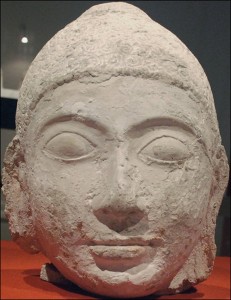
Whatever scraps escaped this storm are still under threat up until modernity. In 1959 the below pictured Buddhist statue was discovered in an excavation. It had clearly been intentionally buried to escape the wave of destruction that swept over the Maldives in the immediate aftermath of its conversion to Islam.
Almost immediately upon discovery, the statue’s head was smashed off, and most of the brittle torso was reduced to fragments. Below is the remaining head in the National Museum, after undergoing some restoration. Though given what happened in 2012 (see below) I am unsure of its current fate.
Recently I was reading over the “Presidential Address of Desabhandhu C. R. Das at the thirty-seventh session of the Indian National Congress held at Gaya on 26th December 1922” also known as “Freedom Through Disobedience.” I kept highlighting key passages for my own reference, but I thought that I’d post them up here for those interested in such things but who don’t have the time or desire to read the full 75 page speech. Unless otherwise noted, all quotes here come from that speech. But if you are interested in reading a lot, you could also check out this other collection of his speeches, “India for Indians” which fleshes out some of the details of Deshbondhu’s worldview which his Gaya speech leaves out. This will be somewhat relevant to the Ancient Constitution post I made earlier.
Deshbondhu (title meaning “friend of the nation”) seems like a much more lucid thinker than practically any other Indian independence leader who has risen to prominence in the historical memory of Indian independence in the west. In many ways he ends up approaching conclusions which in the west are associated with radical federalism, anarchism, classical liberalism, or proto-fascist conservatism. If this collection of ideas seems incongruous to you, you might want to check out this essay on anarchism and nationalism called Anarchist Integralism: Aesthetics, Politics and the Après-Garde which although hostile to integralism, shows how all these ideas are related to one another. Ultimately I think that Deshbondhu’s Swaraj ideology, like the preceding Swadeshi Ideology in its Bankinchandra through its Tagore forms, as well as Subhash Chandra Bose‘s unnamed ideology, and pretty much all forms of Bengali and Indian “culturalism” including Hindutva are all Indian manifestations of integralism. Deshbondhu’s iteration seems to be a more anarchic, libertarian, and internationalist iteration of Indian integralism than the average (though not as free spirited as Tagore).
Like Burke, and the liberals I mentioned in the Ancient Constitution post, Deshbondhu believed that rule of law had to be subservient to some other concept of law (shall we call it natural law?) in order to justify obedience:
Why are the Indian Criminal Law Amendment Act 1908 and the Prevention of Seditious Meetings Act 1911 to be retained on the Statute Book? For the preservation of law and order? They little think these learned gentlemen responsible for the report that these Statutes, giving as they do to the Executive wide, arbitrary and discretionary powers of constraint, constitute a state of things wherein it is the duty of every individual to resist and to defy the tyranny of such lawless laws. These Statutes in themselves constitute a breach of law and order, for, law and order is the result of the rule of law; and where you deny the existence of the rule of law, you cannot turn round and say it is your duty as law-abiding citizens to obey the law.
Much of the cultural output from the Mayura to the Gupta period reflects the themes of Lokayata. Though it had always been prevalent amongst the population, as an aspect of Arthashastra, a pragmatic, syncretic permutation of Lokayata contributed to the ruling ideology. (1) Shastri is fully convinced of their influence:
“The Lokayatikas were a creed of joy, all sunny. Through their influence, at that period of Indian history [broadly speaking, 200 BC – 400 CE], the temple and the court, poetry and art, delighted in sensuousness. Eroticism prevailed all over the country. The Brahmin and the Chandala, the king and the beggar took part with equal enthusiasm in Madanotsava, in which Madana or Kama was worshipped. Reverences to this festival are not rare in works of poets like Kalidasa, Bisakha, Datta and Sreeharsa.” (2)
Illustration depicting a scene from a Kalidasa poem. This type of erotic content is fairly standard for poetry of this period. The poem and image source are Joshiartist.com
Poetry of this period communicates the earthly, pleasure oriented, anti-clerical ethos extremely well. What follows are four representative samples of poetry from the era of Lokayata’s greatest influence:
From “The True Shape of Human Bones — On the Dawn of Anatomical Dissections in Early Modern Japan” By Michel Wolfgang. p 42
Warning! Very graphic imagery ahead if you choose to click through to this article.
I had the hypothesis that the type of “body horror” imagery which we see in modern Japanese horror Manga had some kind of historical relationship with Japanese Buddhism, probably via Buddhist meditative practices focused on repulsion. After some study, I am convinced of this hypothesis.
The imagery I saw in these manga reminded me of certain anatomical sketches and grotesque Japanese paintings from the Buddhist tradition. But what really put the idea in my head that there might be a connection between the contemplative practices of Buddhism and these manga was the disturbing experience of actually reading them. Although I’m not a Buddhist or well versed in how these particular meditative practices are supposed to be carried out formally, the straightforward descriptions of these meditations seems at least superficially similar to the experience of viewing grotesque images on paper.
Lets me show you what I mean:
Quotations from the Sutras:
The following is from Ekottarikāgama 12.1, which seems to be a Chinese recension of earlier texts:
““In this case, the practitioner meditates on the body as a body and according to its functions. When he examines it from head to toes or from toes to head, he sees that it is composed of impure constituents, and he is unable to be attached to it. He observes that this body has hair of the head and hair of the body, nails, teeth, skin, flesh, sinews, bones, marrow, sweat, pus, stomach, small intestine, large intestine, heart, liver, spleen, kidneys. He observes and recognizes urine, excrement, tears, saliva, blood vessels, grease, and observing and knowing them all, he is unattached and regrets nothing. This is the way the practitioner observes the body in order to realize peace and joy and be able to end unwholesome thoughts and remove anxiety and sorrow.”
It even explicitly uses a butcher analogy:
“Just like a skillful butcher or his apprentice might lay out the different parts of a slaughtered cow and distinguish the leg, heart, torso, and head, the practitioner observing his own body distinguishes the Four Elements just as clearly, seeing that this is earth, this is fire, and this is air. Thus the practitioner meditates on the body in the body in order to end attachment.”
Did India have an Ancient Constitution worth respecting, or not? Did the British uphold it, or destroy it? For a Libertarian or Burkean Conservative Hindu, these are important questions to consider dispassionately. The answer actually matters. If India had an Ancient Constitution which was destroyed when the British came, then much of India’s existing constitution, a combination of British laws and the arbitrarily imposed theories of Ambedkar, is an usurpation of the ancient rights and privileges primordial to the land and the race. The very basis of the Indian state is in question in this case. On the other hand, if India had no such Ancient Constitution, or if it was destroyed by the Mughals and restored by the British, then the period of British rule was a period of liberation from Oriental Despotism wherein India was Brought Into History as Hegel might have said. This is a somewhat false binary, but I present it anyway to show some of the dramatic potential conclusions we can come to.
Its also important to consider what such a concept as an Ancient Constitution really even means. Is it a principle of abstract justice which is universal? Or do different societies create internally valid social compacts which might differ from one another in legitimate ways? Or is this an incorrect way of framing the question?
I’m not really going to try to definitively settle the historical question in this post. I’m still doing research on the topic and will put out my full view on it later if I think I gain enough information to make such a judgement. I’ll instead just briefly discuss what the idea of an Ancient Constitution meant to a few thinkers in the context of India. I’ll look at Bose, Burke, Roy, and Naoroji.
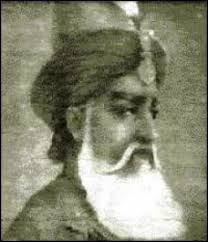
Portrait of Subhash Chandra Bose. Image source: quotesgram.com
I was reading about non-monarchical forms of government in ancient India. Really I was interested in what they call the “Republics” of ancient India. But that concept is a bit misleading. It has all sorts of Eurocentric connotations, and implicit associations with democracy, egalitarianism, populism, etc. It has those implicit connections even though many European republics were essentially similar to the Indian ones insofar as they had restricted franchise and were basically aristocratic or oligarchic in nature, or merchant guild-based. In Sanskrit they were called Janapadas, Gana Sanghas, or a few other more esoteric words.
I suppose one major difference between Indian and European republics is that there is European republics frequently had agents which were said to “represent” the people, implying that “the people” were the sovereign ruler of the society. “The People” generally had an aristocratic definition, but also had the capacity to get quite plebian. It is difficult to tell who was regarded as sovereign in some of the following Indian examples, but if I had to guess I would say that as a general rule the ruling Kshatriya clan, or confederation of clans, was regarded as sovereigs. That said, in other literature I also saw evidence to suggest that sovereignty was also sometimes vested in individual villages, districts, or constituent guilds or corporations which themselves sent representatives to the council. Without copies of their constitutions we don’t know for sure, but I don’t evidence of directly democratic institutions. And why would we? Political egalitarianism is an alien concept to the subcontinent.
Given the existence of these republics really amazing that we still think of India as a static land of “Oriental Despotism.” For instance, we think of Buddha as a “Prince” when really he was a prince only insofar as he was the son of the elected leader of the Shakya Republic (to be fair, Buddhist literature inflates Sudhodana’s reputation which confuses this issue as much as the Hegelian/Marxist historiography). Republics are also central to the history of Jainism. Anyway the point is, India had ancient aristocratic republics and that is cool.
Below is a large chunk of Chapter 1: Forms and Types of States from the book Aspects of the ancient Indian polity, by Narendra Nath Law,(Oxford, The Clarendon press, 1921.) Apologies for the typographical errors, I tried to clean up the ones which inhibited meaning:
As anyone familiar with the orthodox Hindu darshanas knows, a belief in God is not a central feature of all orthodox schools of thought. Two of the orthodox Darshanas in particular seem distinctly rooted in materialism: Samkhya and Vaisheshika. Those are discussed below.
“If the Sankhya philosophy were in the earlier times an explicit philosophical re-statement of the fundamental theoretical position implicit in Tantrism, and, if further, as we have aready tried to argue, the term Lokayata originally stood for the beliefs and practices broadly referred to as Tantrism, then original Sankhya may be viewed as the most important developmet of the Lokayata tradition in Indian philosophy. Silamka, the Jaina commentator, was justified in denying any basic difference between Sankhya and Lokayata. Sankara, too, made the Sankhya philosophers quote the authority of the Lokayatikas”[1]






 Videshi Sutra
