I recently read this book, which I would like to share my impressions of. Or at least my impressions of the first essay, entitled “The Politics of Alms gathering: Asceticism, Exchange, and the Alimentary Ethics of Ancient Buddhist and Jain Mendicants”. It is a fairly short book consisting of just two essays, so it is the type of thing which is easy to read and review. The first essay was quite interesting. I feel as though a Jain reading it would be irritated and maybe have some counterarguments. Nevertheless, I’ll just present it relatively uncritically, as this is more of a summary or a book review than a full analysis which would require further follow up research.

Sutherland frames ancient Indian monastic communities in a way I haven’t heard before, though which in retrospect is rather intuitive. The idea is that Jain, Ajivika, Buddhist, and even Hindu renunciates all at one point in time late in classical antiquity followed a relatively similar pattern of monastic life (and continued to do so into the middle ages, and to some minor extent still do) centered around relatively extreme renunciation and ascetic practices, including wandering throughout cities and villages, isolation in the forest for extended periods of time, and a pretty extreme impulse towards maintaining some iteration of “purity”. Namely, purity of the sort which would be required to attain moksha, or nirvana, which sometimes could be termed “ritual purity” though that concept is not really inclusive enough to describe this.
Lets pause on this for a moment. This is unique and interesting to me because while we sometimes think of sramanas as sort of consisting of one distinct class of monks. We often think of them as being united by some implicit non-vedic doctrines, or perhaps a shared prehistory which is no longer accessible to us. Thinking of them as instead united by a shared practice is a different idea, an interesting one to me, and one which might offer a more obvious explanation of how it is that Brahminical ascetics were effectively part of the same system, social milieu, and world of ideas.
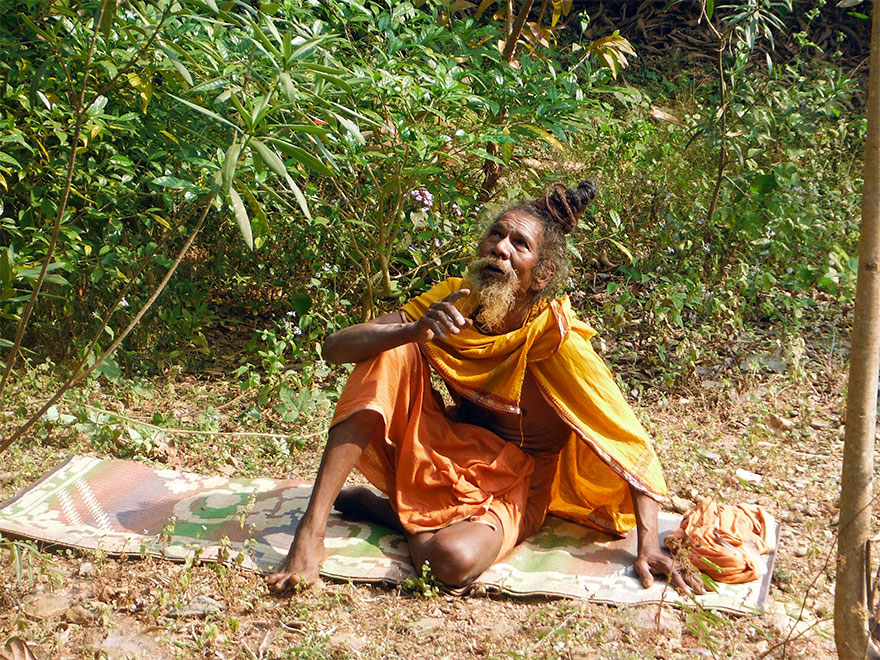
Continuing on, This whole ascetic programme created a problem, because now you have renunciates who basically don’t engage in the normal social world at all except in one particular respect, which is how they get their food. This link with normal society, though very thin, is a potential vessel for contamination. What if the food you take entails violence in some way? Now you’ve got that karma, that papam. What if the person giving it to you is ritually impure? Now you’ve got that on you as well. (Side note on that: Actually, just as this is a problem for the ascetic, it is also a social function of an ascetic. The ascetic, assuming he is powerful enough, has the spiritual power to “burn through” or “digest” the karma of the laity, which they themselves do not possess. In this sense giving the ascetic food relieves the laity of their papam via the symbolic act of donation, and allows the ascetic to dispense with the karmic debt in a sort of specialized form of spiritual labor. Though obviously this entails risk on behalf of the ascetic). What if you start storing up the food? Now you’ve got acquisitions and property which opens the door to materialistic living and an abandonment of ascetic practice. What if the food tastes really good? Now you’ve become mired in attachments as well. So these monks are in a situation where they have to be really really concerned about what types of food they take, who they take it from, and under what circumstances. This puts them in an odd situation where they are nominally independent and free of social strictures and conventions, while also being totally at the mercy of the productive classes of society for their food, while also being subject to risks imposed by the “sinful” acts of that same society.
The Jains and Buddhists are used in the essay as contrasting examples of how to confront this situation. The Jains go hardcore. They accept only the exact type of food, dont eat very much of it, and maintain social distance between themselves and their donors. Consequently,, their relations with the laity develop in a particular manner wherein the laity develops a particular code of ethics distinct from that of the monks pertaining to how they may properly donate to the monks. This isn’t dwelt upon too much, because there isn’t as much literature on it. Akin to Hindu scripture which focuses on the conduct of Brahmins, the focus of Jain literature is on the conduct of their monks. What does exist pertaining to the laity is written from the POV of monks criticizing their immoral conduct. In any case, you can see how this would lead to a sort of tension between the monks and the laity. In addition, the emphasis on strictness in the dietary aspect of monastic life sort of implies / goes along with a broader sense of strictness about monasticism in general. Jains, ever the sticklers, love to criticize Buddhists as fake ascetics, with some justification. A lof of this comes from the Jain “spiritual materialism” in the sense that they literally do have a materialistic and mechanistic cosmology. So to a very large extent the physical body will in a mechanistic manner be impacted by karma, regardless of intention or mindfulness. Thus correct practice is crucial. Funnily enough then, the physical body becomes this constant locus of battle for the Jain monks, rather than the mind, as they are functionally some kind of esoteric form of materialist monists. The constant battle against desire, against lax conduct, etc all take place in the body. Therefore spiritual development is indicated by one’s ability to resist physical temptations and endure all of these material difficulties with equanimity.
Editorializing for a bit: It is actually kind of insane the level of contempt and pretentious superiority which the essay conveys that the Jain monks have, or had for the laity, and the ridiculous purity standards they uphold for themselves. For example, part of the following quote was used in the text, but I found it in its original context, which does lessen its impact somewhat in comparison with the selected quotes which made it into the book, but you still get an overall sense of contempt and separation.

(source)
Ārdraka: “Know this: those who use cold water, eat seeds, accept things especially prepared for them, and have intercourse with women, are (no better than) householders, but they are no Śramaṇas. (8)
“If those who eat seeds, use (cold) water, and have intercourse with women, are admitted to be Śramaṇas, then householders too are Śramaṇas; for they do the same things[5]. (9)
“Monks who eat seeds and use cold water, who beg alms as a means of living, will, though they leave their relations, be born again and again, and will not put an end to mundane existence.” (10)
…
“Thoroughly examining the consequences of acts of living beings, (our monks) have found out a pure way of sustaining life. It is a maxim[16] of the monks of our creed[17], that nobody who lives by secret sins[18], should lay down the Law. (35)
“A man who always feeds two thousand worthy monks, does not control himself, and will be blamed in this world like a man with bloody hands. (36)
“They kill a fattened sheep, and prepare food for the sake of a particular person; they season the meat with salt and oil, and dress it with pepper. (37)
…
A Vedic Priest: ‘Those who always feed two thousand holy[22] mendicants, acquire great merit and become gods. This is the teaching of the Veda.’ (43)
Ārdraka: “He who always feeds two thousand holy cats[23] (i.e. Brāhmaṇas), will have to endure great pains in hell, being surrounded by hungry (beasts). (44)
“He who despises the Law that enjoins compassion, and praises the Law that permits slaughter, and who feeds but a single unprincipled man, even if he be a king, will go to darkness[24], and not to the gods.” (45)
…
“You have, in your mind, made equal both those who lead a blameable life, and those who in this world practise right conduct. Friend, you are deluded,” (51)
…
A Hastitāpasa[27]: ‘Every year we kill one big elephant with an arrow, and live upon it in order to spare the life of other animals.’ (52)
Ārdraka: “If every year you kill but one animal without abstaining from sin, though you are not guilty of the slaughter of other creatures, there is little difference between you and a householder. (53)
“If a man kills every year but one animal, and lives (in other respects) as a Śramaṇa, he is unworthy, and works his perdition. Such men will not become Kevalins.” (54)
Similarly in this other verse:
A true monk should not accept such food and drink as has been especially prepared for him along with slaughter of living beings. (14)
He should not partake of a meal which contains but a particle of forbidden food 1: this is the Law of him who is rich in control. Whatever (food a monk) suspects (to be impure), he may not eat. (15)
A man who guards his soul and subdues his senses, should never assent to anybody killing beings.–In towns and villages cases (will occur, which place) the faithful (in a dilemma) 2. (16)
Hearing the talk of people, one should not say, ‘this is a good action,’ nor ‘this is a bad action.’ For there is an objection (to either answer). (17)
He should not say that it is meritorious, because he ought to save those beings, whether they move or not, which are killed there for the sake of making a gift. (18)
Nor should he say that it is not meritorious, because he would then prevent those for whose sake the food and drink in question is prepared, to get their due. (19)
Those who praise the gift, are accessory 3 to the killing of beings; those who forbid it, deprive (others) of the means of subsistence. (20)
Those, however, who give neither answer, that it is meritorious, or is not so, do not expose themselves to guilt, and will reach Beatitude 1. (21)
Buddhists on the other hand go the other direction. The way Buddhist scriptures are written, they make it seem like this change occurred gradually over the course of the Buddha’s lifespan, though there is no way of actually verifying that (at least not without me doing more research on the Sangha’s earliest period), and this may have occurred gradually as the Sangha developed well beyond Buddha’s lifespan. The book describes this as a shift from “Paribajika” monasticism to “Bhikkhu” monasticism. Essentially, the Buddhists eased up on a lot of these ascetic requirements which formerly would have unified them with Jain, Ajivika, and some Hindu ascetics. The Buddha himself seems like he had been dismissive of Jain style ascetic requirements for quite a long time, as he himself had endured them (or something quite comparable) in his younger years and considered them to be pointless. In fact, it was only after abandoning them (and getting in few calories) that he was able to have enough physical strength to concentrate properly such that he actually achieved enlightenment. So his abandonment of these policies actually directly precipitated his ultimate spiritual goal. Nevertheless, initially at least, Buddhist monks still had somewhat strict requirements compared to what would come later. They had similar rules as the Jains in terms of not accepting food which had been intentionally prepared for them, not accepting rich foods or dinner invitations, not accepting more food than could be eaten in 1 meal, only eating 1 meal per day, etc. Over time many of these rules relaxed. Solitary wandering “like a rhinoceros” was emphasized. Then, gradually the requirement to be a solitary monk relaxed. These became optional requirements:
“He should resort to solitary dwellings.
He should move about with freedom from bonds.
If he does not find contentment there,
Let him live guarded, with self-posession, in the samgha”
- From the Upammakathapanho
The vasa (rain retreat) was extended into a permanent institution (avasa). Storing up foodstuffs, wearing robes of various types of fabrics, eating meat and fish , and many other formerly forbidden practices slowly become accepted. As he is nearing his death, the Buddha even goes so far as to acknowledge “during the last month of the summer, returning from alms-gathering after the meal having folded the outer robe into four parts, mindful and conscious, I fall asleep on my right side.” What a hedonist!
There are a few reasons for this. Firstly, as I already mentioned, Buddha considered it to be necessary for spiritual practice to have a reasonably healthy and nourished body. Secondly, Buddha (or at least the character of the Buddha we see in the scripture) far more so than the Jains was concerned about attracting new monks. Nobody is going to want to send their kid to be a monk if they think its going to be absolutely brutal. Thirdly Buddha far more so than the Jains was concerned about what the normies would think, and how to gain new lay converts. Dont scare the normies! Instead, encourage a virtue of generosity within them to encourage them to donate. Lastly the monks themselves as they became more organized started to simply be bad at asceticism and didn’t want to do it anymore. This is an employee retention strategy. Moreover the tradition itself was becoming more organized. There were councils, there was sangha property which needed to be managed. All of this required being in one place in a collective for a sustained period of time. This is where we start to get something more approaching what we now think of as Buddhist monastic institutions, as opposed to wandering sadhus. And this also reflects a difference between Buddhist and Jain conceptions of the universe. For Buddhists, a monk should be trained enough such that he isn’t going to be tempted by tasty food, for example, and have such a degree of mental equanimity than even eating meat on occasion (provided it wasn’t killed intentionally for him) won’t cause him aversion or attachment or have a karmic effect. The site of the battle is the mind, not the body. The Jain renounces the world, the Buddhist renounces the self.
There is a “paradox” the essay uses a few times, which isn’t really a paradox it’s just a contradiction. Purity is conceived of in 2 senses. In the first sense, purity has something like an infinite character, and similarly to how taking something out of an infinity quantity still leaves you with an infinite quantity, adding impurity to purity cannot actually sully the purity of the pure thing. This is the sort of idea conveyed in the Om Purnamadah Purnamidam mantra. This ultimately is more similar to the Buddhist sense. If they’ve done their practice correctly, their minds are pure, and cannot be sullied by these material interactions.
In the other sense purity is conceived of as something like a totally white tapestry. Even a tiny speck of impurity alters its condition completely, in a much more dramatic sense than a tiny spec would alter a jackson pollock painting. The binary of pure vs impure is altered by even the smallest of defects. In this sense, purity is extremely fragile and needs to be heavily guarded. This is more similar to the Jain sensibility.
The consequences for the growth of Buddhism and the stagnation of Jainism are obvious. One engages with the community of lay people, appreciates their efforts, participates in this crucial gift and receival norm and ritual which so many human societies have, expresses thanks and gives merit for it. The other secludes itself, draws harsh lines between monks and laity, condemns the laity, yet feeds off of its labor hypocritically.

—
The second essay in the book focuses on the topic of Ahimsa, discussing it in the contexts of sacrificial rituals, productive farming, and royal patronage. It touches on the social bases of Jainism and Buddhism, noting that their supporters were primarily Vaishyas. Thapar also discusses this, but here it’s presented more concisely. Notably, it would have been a particular mercantile subset of Vaishyas (which we still see in Jains today) since most Vaishyas were farmers. It’s easy for non-farmers to condemn the violence inherent in agriculture, but much harder to condemn the violence of war and statism, especially when relying on royal patronage. Each tradition has its workaround: Buddhists negotiate around it with contradictory exceptions for soldiers, Jains ignore the problem, and Hindus have a more contextual interpretation of Ahimsa, where it’s not a paramount consideration in every context. The essay is framed around a discussion of Gandhi and the coherence of his conception of Ahimsa, which I find tangential and perhaps not the best frame for this discussion. I may review that in the future, but for now, I just want to share these thoughts.
 Videshi Sutra

