
I recently saw some Libertarian women carrying a sign which said “My Body = My Property”. I suppose they were doing this as a sort of alternative permutation of “My Body, My Choice” to lend themselves an explicitly Libertarian flare to their pro-abortion rights advocacy. This is also a common sentiment and justification for abortion rights which I have heard from many Libertarians. However then I thought…. “Is it really property though?” This actually seems somewhat contentious. Let me go over some perspectives in order from least to most persuasive to me. Unlike a lot of what I post here, this will just be a few spur of the moment thoughts rather than something deeply researched and considered. This shouldn’t be construed as implying any particular stance on abortion.

On one hand, on a Marxist critique, for instance, one might argue that by viewing the body as “property,” we’re objectifying it, treating it as an object subject to public decision over ownership and control, a thing to be utilized and exploited, an form of alienation splitting the integrated self upon itself. You can also see how this would flow into a feminist critique where the body is now becoming an object or a commodity to be controlled, purchased or exchanged.
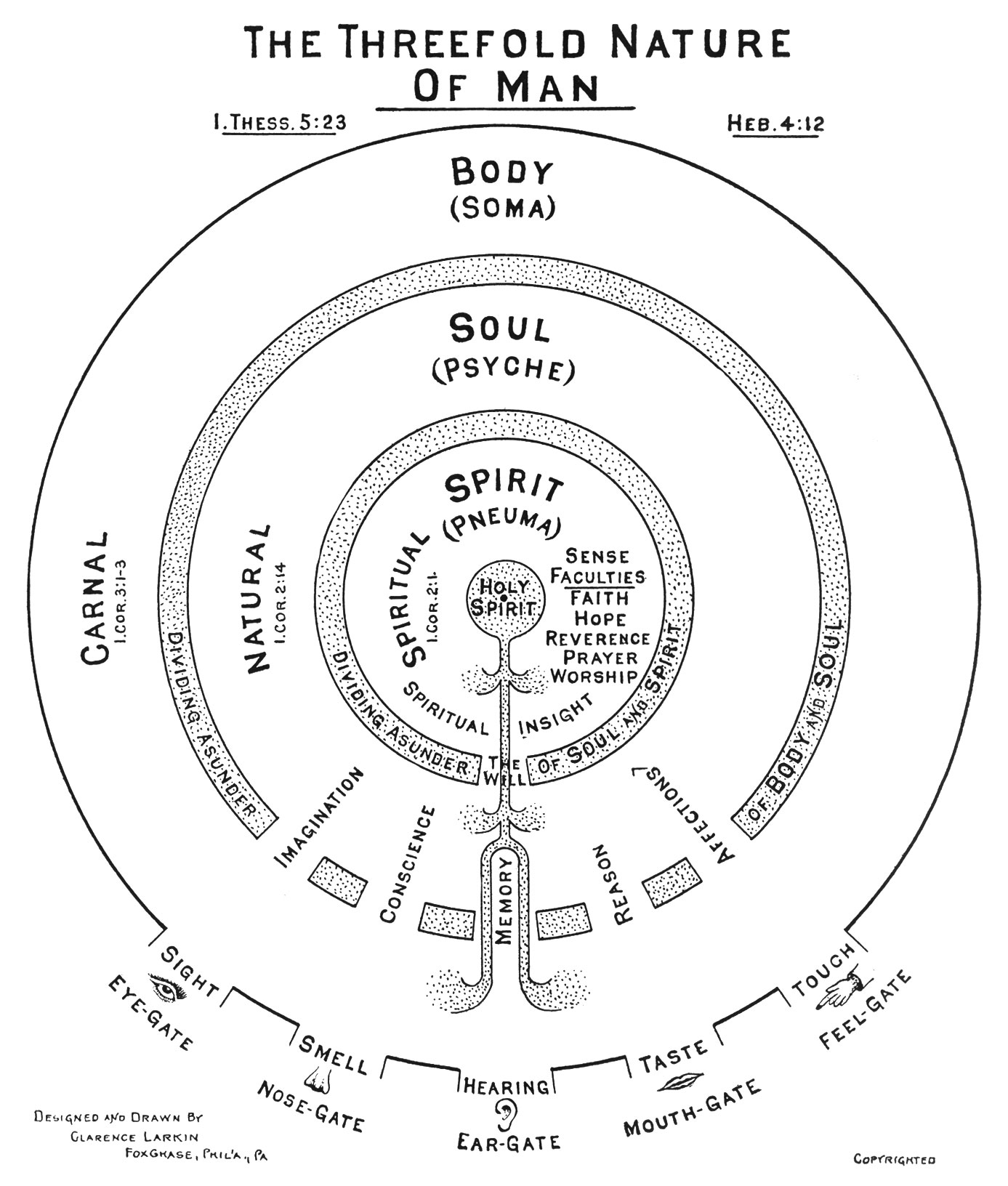
Conservatives might argue that this view undermines the intrinsic dignity of the human body by turning it into a “thing” rather than acknowledging it as an inseparable part of who we are. In many Abrahamic religious frameworks, as well as those of Dvaita and Vishwadvaita Hinduism I can see it as being considered disrespectful to treat the body merely as “property”, and these religious frameworks often do make the almost legalistic distinction between the body and forms of material property. The libertarian phraseology could be seen as reducing the body to something viewed transactionally or even mechanistically, stripping it of the unique moral and spiritual value it holds as a particular type of gift from God, perhaps one which ultimately belongs to God and is only held temporarily by humans in a stewarding role, during which time they are intended to use it for functions prescribed by its true owner, God.
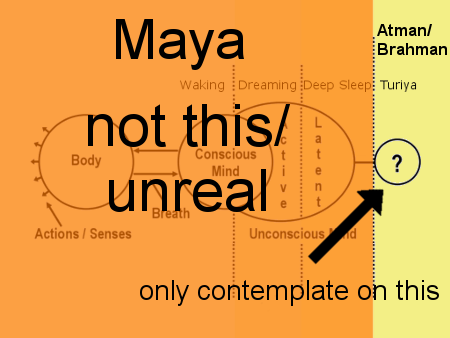
However in Advaita Vedanta, and certain other Hindu philosophies, there is an emphasis on the concept that the true self transcends the body, mind, and ego. Those things are temporary and their stable nature is considered illustory. They are more like vehicles, tools, or temporary projections that the self incidentally uses to operate in material reality. In that light, rather than alienating, referring to the body as “property”, though an odd choice of a term in this context, might be clarifying as to the true nature of the self as distinct from the contents of Maya (illusion). This is the closest to a point of agreement I can find in the various viewpoints I decided to consider today. Notably though, attachment to the body, or any other form of property for that matter is considered a spiritual obstacle, and necessarily confused (engrossed in Maya), so these girls in their impassioned defense of their body-as-property are still potentially exposing themselves as having fallen into a samsaric trap.
An adherent of Samkhya would likely just skip to and emphasize the last sentence from the above paragraph. For a Samkhya follower, even identifying something as “mine” is a dangerous misidentification leading to attachment and samsara. For Samkhya followers, Purusha (consciousness) and Prakriti (nature/matter) are distinct substances comprising reality, the self being an aspect of the former and the body an aspect of the latter. The idea that these two things literally do not interact at all on the substantial level. Purusha is simply the witness or passenger (in this sense Purusha “brings Prakriti to life” i.e. brings it within view of consciousness) but cannot influence Prakriti, which operates according to its own physical laws. The purpose of Samkhya philosophy is to cultivate discernment as to what is and is not the self, so identifying anything composed out of matter as “mine” would be an immediate red flag.


An adherent to Kashmiri Shaivism (and on a different level of analysis, one in which they take the second step “Maya” line of inquiry into the resolution of Maya back into Brahman, an Advaitin may also lean harder into this framework) might instead emphasize that the body, mind, and all of the material world are themselves manifestations of the divine, which is the proper locus of selfhood. In this sense the self is quite literally the body, as it is everything else, though the body has a particularly important role as the site of self realization, and as the aspect of selfhood required to gain self-knowledge and self-inquiry. So for them, identifying the body as property could be seen as a form of ignorance, introducing unnecessary and false divisions into the unified Shiva-mind-body-universe, which is the true self.


 Videshi Sutra
